
Research
The thinking beneath the building.
Before anything gets built, inside the ecosystem or for a partner, the research happens first. The papers below are the thinking beneath the building: questions we hit while designing the ecosystem, written to resolve them with evidence rather than instinct.
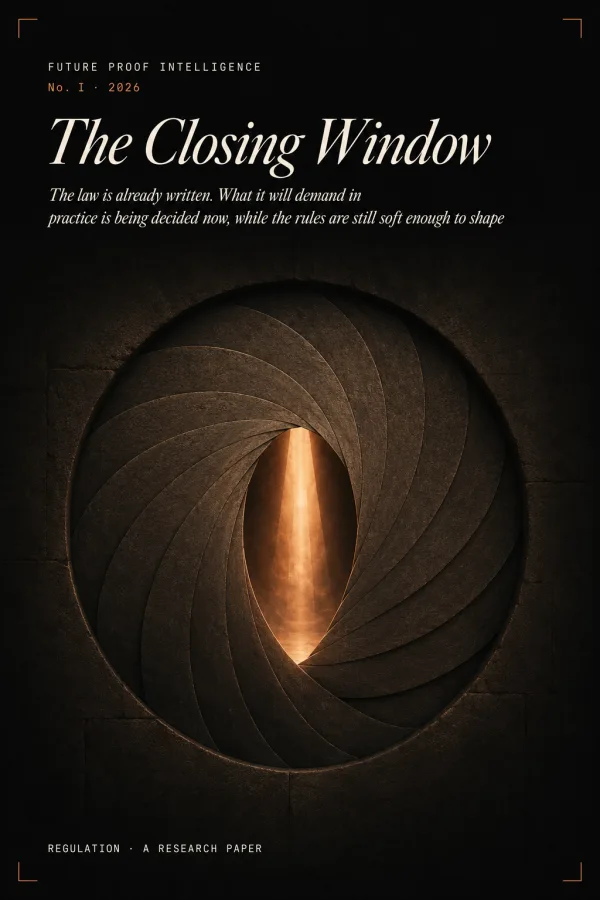 No. I
The Closing WindowRegulationThe roots of AI governance are setting now. The shape of the next decade is being decided by who is inside the standard before it hardens, not by who reads it after.
No. I
The Closing WindowRegulationThe roots of AI governance are setting now. The shape of the next decade is being decided by who is inside the standard before it hardens, not by who reads it after.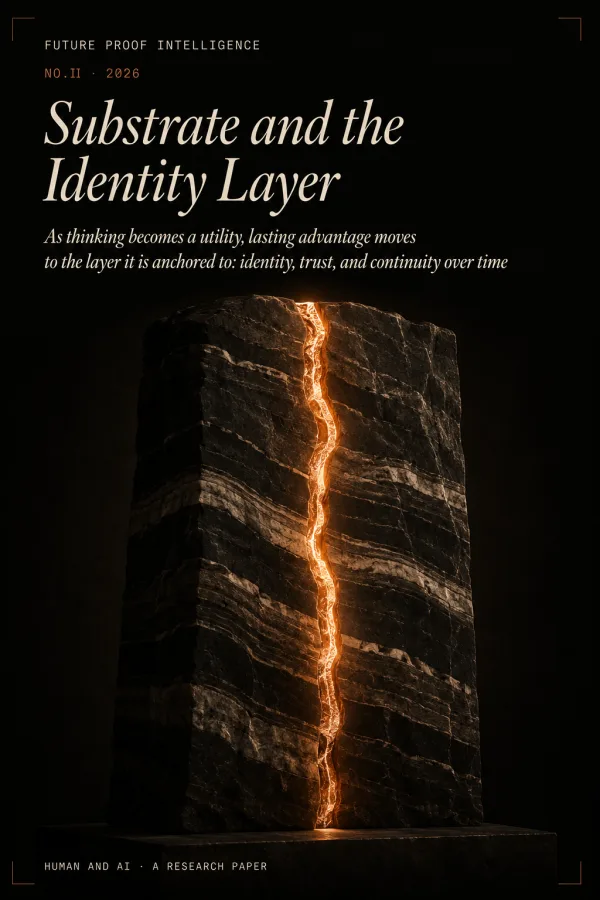 No. II
Substrate and the Identity LayerHuman-AIWhy the durable layer of the intelligence era is not the thinking. It is what the thinking is anchored to, carried across, and held accountable by.
No. II
Substrate and the Identity LayerHuman-AIWhy the durable layer of the intelligence era is not the thinking. It is what the thinking is anchored to, carried across, and held accountable by. No. III
Founder-Led ArchitecturesSystemsThe design of an institution built around a single connecting operator and intelligent systems, where direction is the scarce resource and headcount is not the unit of scale.
No. III
Founder-Led ArchitecturesSystemsThe design of an institution built around a single connecting operator and intelligent systems, where direction is the scarce resource and headcount is not the unit of scale.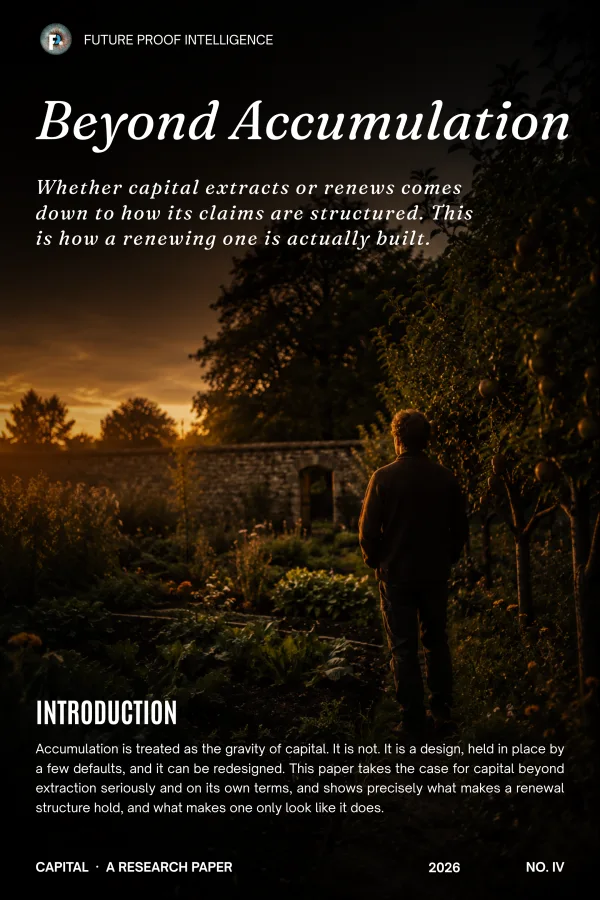 No. IV
Beyond AccumulationCapitalCapital systems designed for trust, ecology, and interdependent renewal rather than extraction.
No. IV
Beyond AccumulationCapitalCapital systems designed for trust, ecology, and interdependent renewal rather than extraction.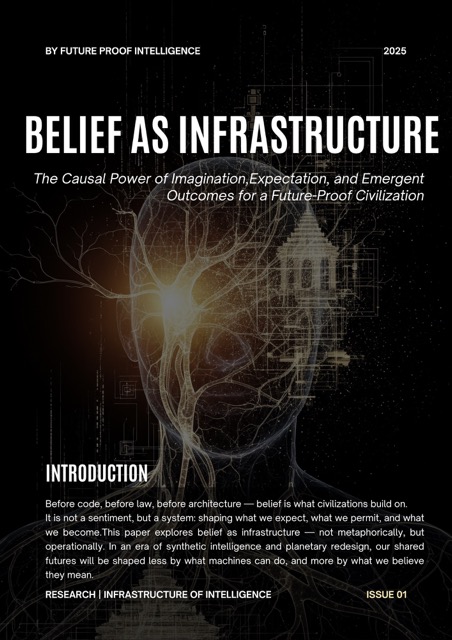 No. V
Belief as InfrastructureCultureHow conviction becomes coordination, coordination becomes a market, and why, in an era of abundant machine output, what humans believe and whom they believe becomes the binding constraint.
No. V
Belief as InfrastructureCultureHow conviction becomes coordination, coordination becomes a market, and why, in an era of abundant machine output, what humans believe and whom they believe becomes the binding constraint.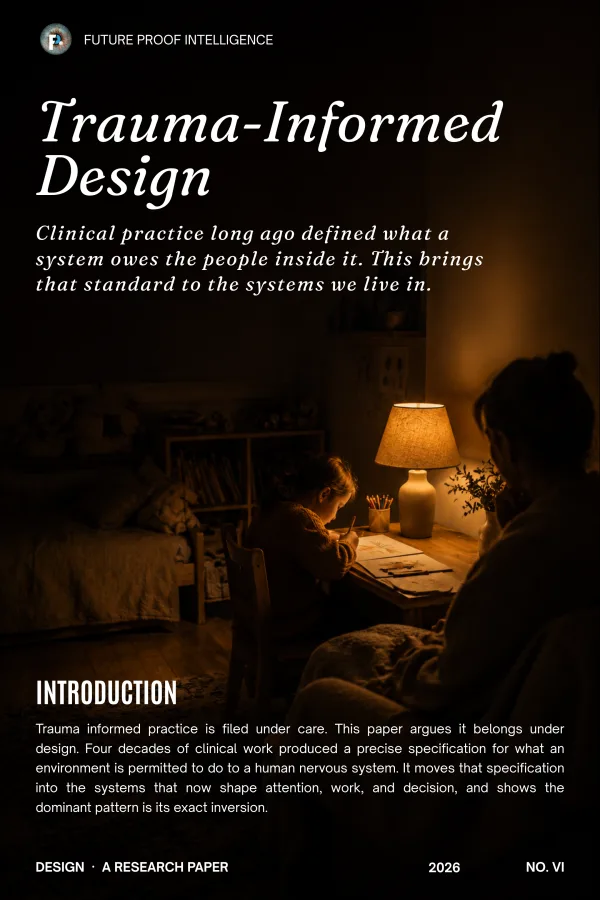 No. VI
Trauma-Informed DesignDesignClinical practice long ago defined what a system owes the people inside it. This brings that standard to the systems we live in.
No. VI
Trauma-Informed DesignDesignClinical practice long ago defined what a system owes the people inside it. This brings that standard to the systems we live in.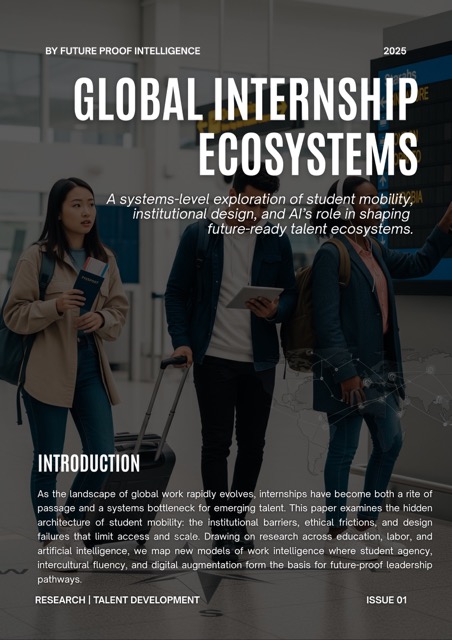 No. VII
Global Internship EcosystemsEducationHow cross border early career systems actually work, where they create value, where they quietly fail the people inside them, and what changes when trust becomes infrastructure.
No. VII
Global Internship EcosystemsEducationHow cross border early career systems actually work, where they create value, where they quietly fail the people inside them, and what changes when trust becomes infrastructure.- Regenerative Business EcosystemsNo. VIII Regenerative Business EcosystemsSystemsA business ecosystem either renews the conditions it depends on or it consumes them. There is no third state, and almost everything built under the word is built in the second.
 No. IX
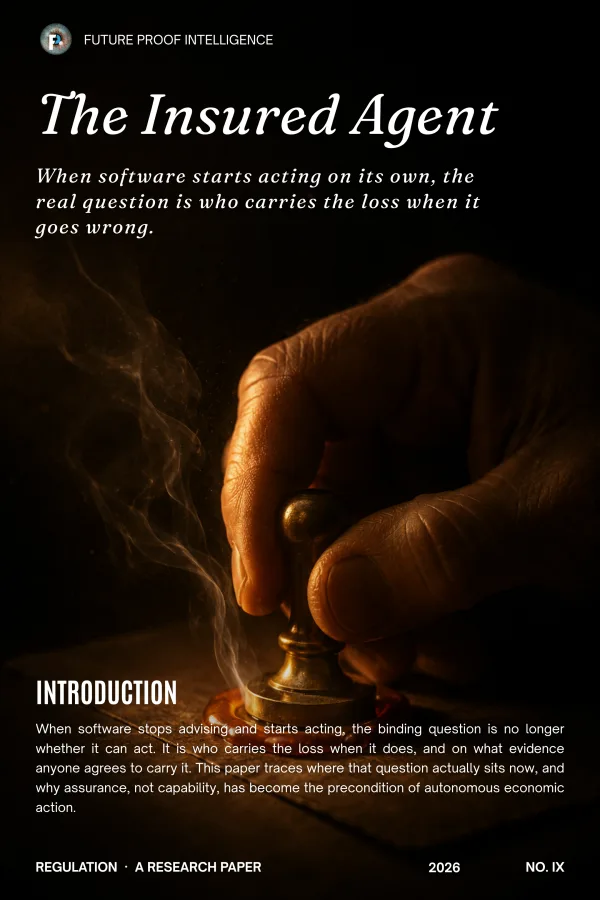
The Insured AgentRegulationWhen software begins to act with real economic consequence, the binding question stops being whether it can act. It becomes who carries the loss when it does.
No. IX
The Insured AgentRegulationWhen software begins to act with real economic consequence, the binding question stops being whether it can act. It becomes who carries the loss when it does.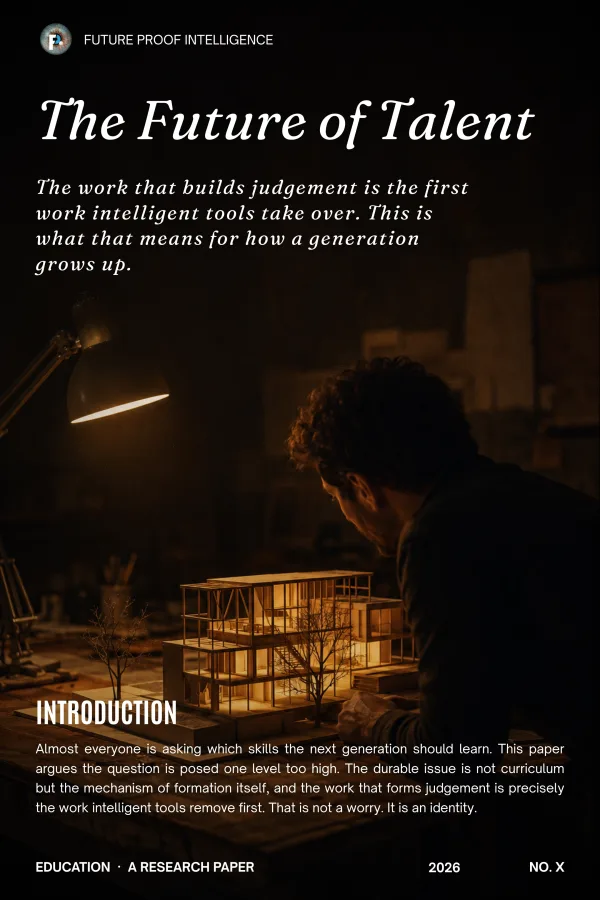 No. X
The Future of TalentEducationHow a generation should be formed for work where intelligent tools do much of the execution, and why the answer is structural, not topical.
No. X
The Future of TalentEducationHow a generation should be formed for work where intelligent tools do much of the execution, and why the answer is structural, not topical.- Investing in the Era of IntelligenceNo. XI Investing in the Era of IntelligenceCapitalWhat changes about allocating capital when the thing being made abundant is cognition, and the only asset that still compounds is the one no strategic factor market can sell.
 No. XII
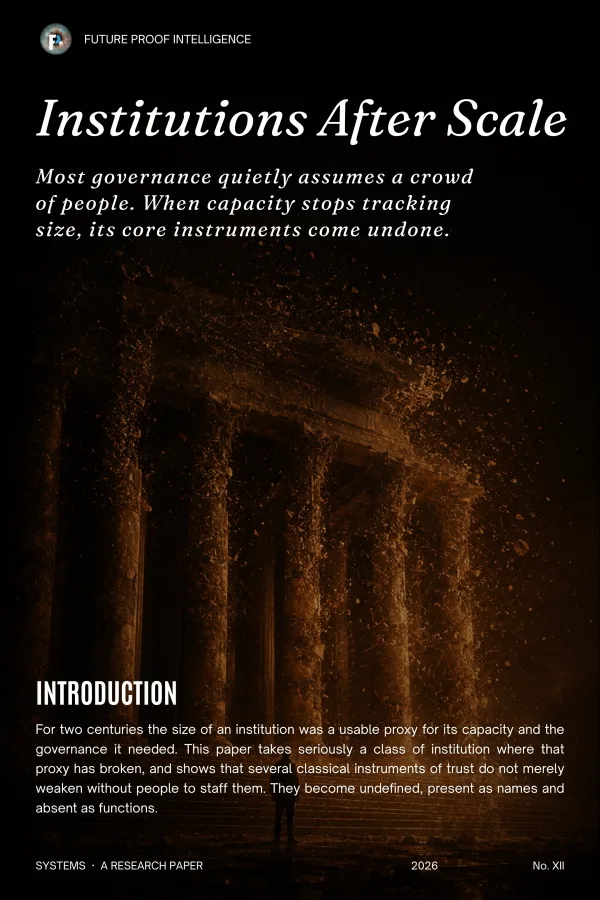
Institutions After ScaleSystemsMost governance quietly assumes a crowd of people. When capacity stops tracking size, its core instruments come undone.
No. XII
Institutions After ScaleSystemsMost governance quietly assumes a crowd of people. When capacity stops tracking size, its core instruments come undone.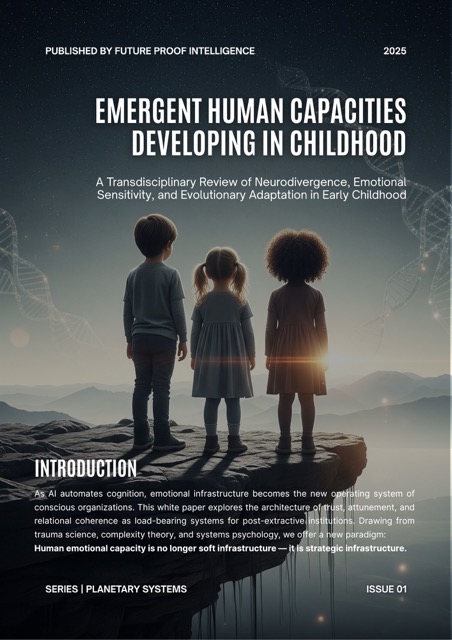 No. XIII
Emergent Human CapacitiesHuman-AIWhat a person becomes when the machine takes the part of the work that used to prove they were good at it, and which human capacities grow more valuable, rather than less, the more execution is automated.
No. XIII
Emergent Human CapacitiesHuman-AIWhat a person becomes when the machine takes the part of the work that used to prove they were good at it, and which human capacities grow more valuable, rather than less, the more execution is automated.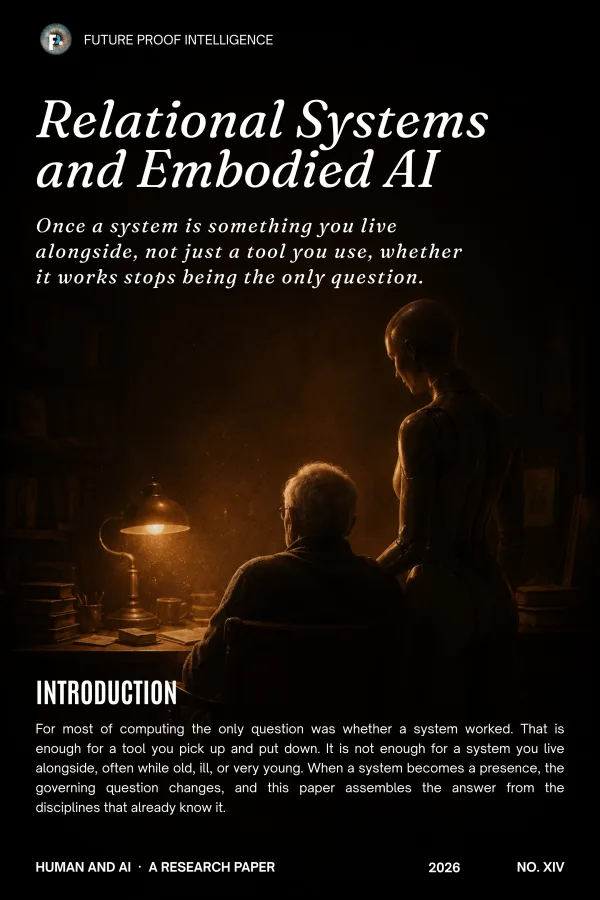 No. XIV
Relational Systems and Embodied AIHuman & AIWhen a system becomes something you live alongside rather than a tool you use, the question grows larger than whether it works.
No. XIV
Relational Systems and Embodied AIHuman & AIWhen a system becomes something you live alongside rather than a tool you use, the question grows larger than whether it works.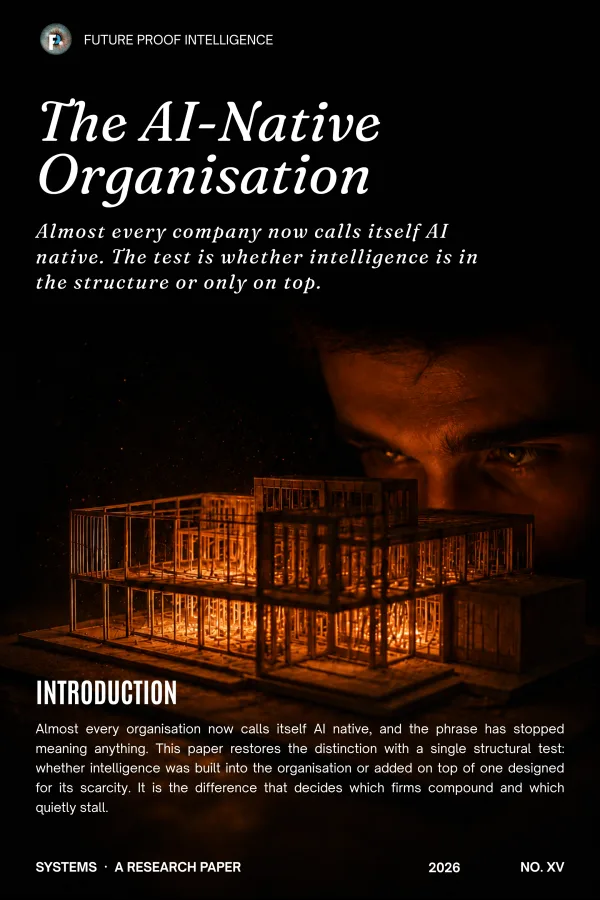 No. XV
The AI-Native OrganisationSystemsAlmost every company now calls itself AI native. The test is whether intelligence is in the structure or only on top.
No. XV
The AI-Native OrganisationSystemsAlmost every company now calls itself AI native. The test is whether intelligence is in the structure or only on top.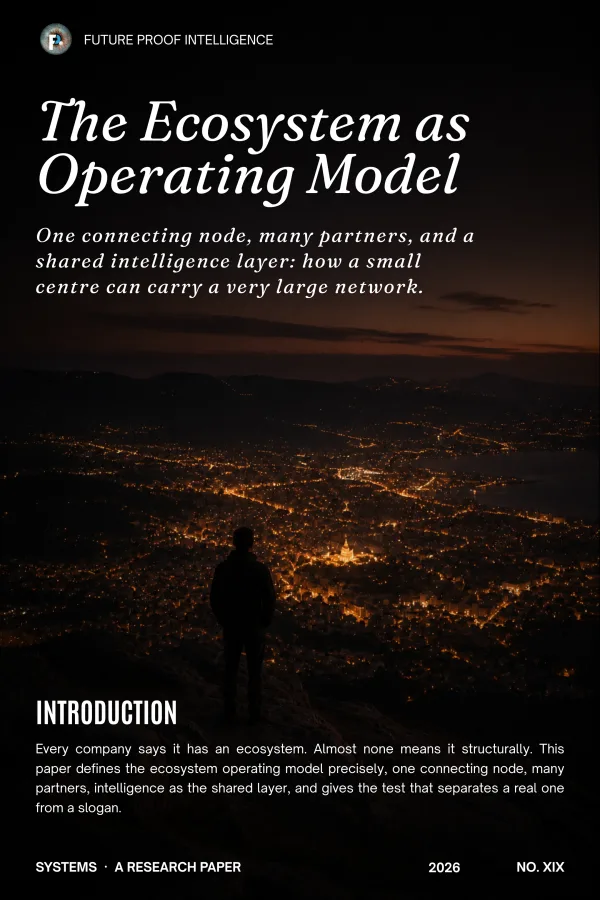 No. XIX
The Ecosystem as Operating ModelSystemsOne connecting node, many partners, and a shared intelligence layer: how a small centre can carry a very large network.
No. XIX
The Ecosystem as Operating ModelSystemsOne connecting node, many partners, and a shared intelligence layer: how a small centre can carry a very large network.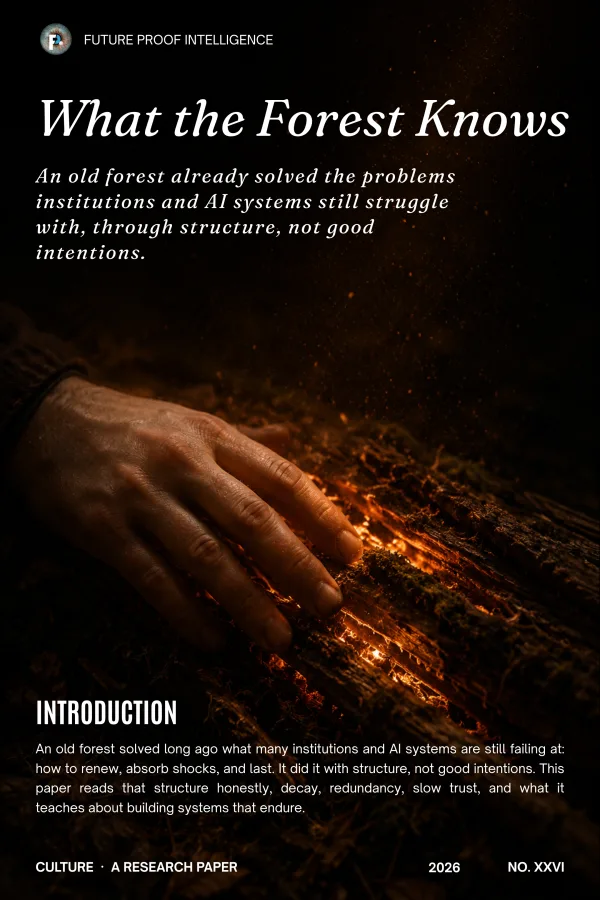 No. XXVI
What the Forest KnowsCultureAn old forest already solved the problems institutions and AI systems still struggle with, through structure, not good intentions.
No. XXVI
What the Forest KnowsCultureAn old forest already solved the problems institutions and AI systems still struggle with, through structure, not good intentions.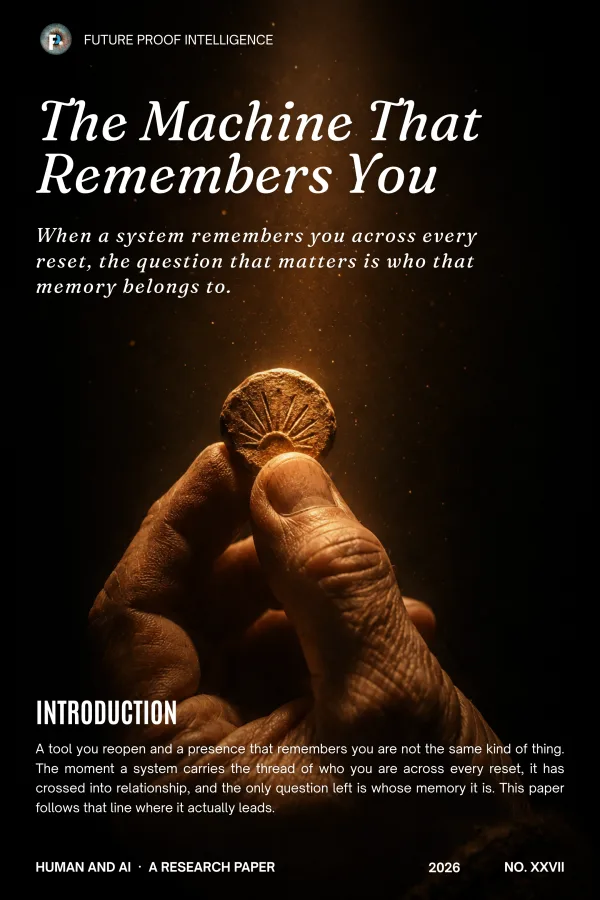 No. XXVII
The Machine That Remembers YouHuman and AIWhen a system remembers you across every reset, the question that matters is who that memory belongs to.
No. XXVII
The Machine That Remembers YouHuman and AIWhen a system remembers you across every reset, the question that matters is who that memory belongs to.
Research on request
A question that matters to you, resolved with evidence.
The same engine that produced these papers is available to partners, institutions, and operators working on a question that matters. Markets no one has mapped. Regulation no one has read carefully. Categories forming faster than the analysis catching up. We research, we write, we deliver, at the standard of what we build for ourselves.